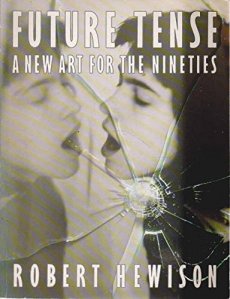
Future Tense: London Writers and 1990 as Year Zero

“The end of a millennium promises apocalypse and revelation. But at the close of the twentieth century the golden age seems behind us, not ahead. The endgame of the 1990s promises neither nirvana nor Armageddon, but entropy.” In Robert Hewison’s Future Tense: A New Art for the Nineties, published in 1990, he paints a world in which the avant-garde has been fetishized and commodified until it has been stripped of all relevance. He describes a cultural stagnation that he associates with postmodernism, and in so doing anticipates Mark Fisher’s ideas of “lost futures” by nearly a quarter century, although both drew heavily on the foundational work of Frederic Jameson in this area.

Hewison does not believe that all is lost, however. In Future Tense he surveys a number of artists and writers who were actively bucking the negative inertia of the time in an attempt to “break through the screen of cultural conservatism and commercial Philistinism to challenge official values and offer a passionate vision of future possibilities.” In a contemporary review of the book for The Observer, Mik Flood states that Hewison’s focus is on those who “have been burnt out, wiped out, priced out or sucked out by the hegemonic monoculture of the corporate marketplace.” Hewison does not limit his study to the plastic arts, but includes actors, performance artists, architects, and writers. To explore British literature’s response to this cultural malaise, he discusses three novels: Peter Ackroyd’s Hawksmoor (1985), Iain Sinclair’s White Chappell: Scarlet Tracings (1987), and Michael Moorcock’s Mother London (1988).

To me there is something prescient about choosing to focus on these three novelists as a group as early as 1990. Ackroyd and Sinclair were poets who had only been writing fiction for a very short time. There was not yet much, if any, buzz about the shared themes that these writers are now known for, which often seems to boil down to history and antiquarianism practiced as an occult art. Most strikingly, in his introduction Hewison states that he has used these three novels, along with the London scenes from Salman Rushdie’s The Satanic Verses, “to evoke an idea of the city—what the Situationists called a ‘psychogeography’—that is more profound than planners’ plot ratios.” This is certainly one of the earliest associations of psychogeography with these London writers to ever appear in print.
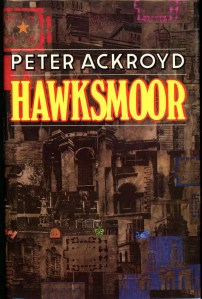
Although all three of these novels take place in and around London, what they share at a deeper level is a unique vision of time and how it functions. In Hawksmoor, Peter Ackroyd replaces the historical architect Nicholas Hawksmoor—who flourished in the early 18th century and is best known for the six London churches he designed—with the fictional Nicholas Dyer, a worshipper of Satan with some very unorthodox ideas about architecture. Hawksmoor himself is transmuted into a 20th-century detective charged with solving a series of murders that have occurred near each of Dyer’s churches. The connections and interactions between the two narratives, separated by nearly 300 years in time, drive the plot.

Ackroyd borrowed—or stole, depending on your point of view— the idea of occult associations with Nicholas Hawksmoor’s designs directly from Iain Sinclair’s 1975 poetic work Lud Heat. In a 1996 article in the London Review of Books, Sinclair describes Ackroyd in a sort of sideways compliment as “an unparalleled library vampire, a gutter and filleter of texts, a master of synthesis.” Hewison’s analysis of Sinclair’s first novel, White Chappell: Scarlet Tracings goes deep. He calls it “a multi-layered scrapheap of literary, historical and autobiographical references, where characters move back and forth in time, and narrative is broken and collaged into a pattern that matches the dissociated experience of the twentieth-century narrator, yet nonetheless is directed towards a transcendental unity.”
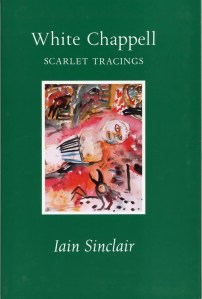
Time, not geography, again becomes the most important element in Hewison’s discussion of the novel. To highlight this aspect, he quotes from the text at some length: “We have got to imagine some stupendous whole wherein all that has ever come into being or will come co-exists. . . . So it’s all there in the breath of the stones. There is a geology of time! We can take the bricks into our hands: as we grasp them, we enter it. The dead moment only as we live it now. No shadows across the landscape of the past—we have what is coming: we arrive at what was, and we make it now.”

Already, at this early date, Hewison seems to deeply understand Sinclair’s approach: “The invitation is to decipher White Chappell, Scarlet Tracings as a prophetic text: its construction suggests further breakdown and dislocation, but it also shows that the experience of the city cannot be limited to the present, nor can the past be confined to museums. The ‘geology of time’ is such that, if we will allow them, the resonances of the past can inform contemporary existence without having to be turned into the simulacra of tourism.” This quote also evinces an understanding of Sinclair’s methodology that would inform his later non-fiction, but would not become well known until the publication of Lights Out for the Territory: 9 Excursions in the Secret History of London in 1997.

In both White Chappell: Scarlet Tracings and in Michael Moorcock’s Mother London, the “city becomes a form of collective unconscious” according to Hewison. The latter novel’s cast of characters is made up of a group of outpatients from a mental hospital, all having suffered various traumas during the Blitz. The narrative “moves forward and back in time between 1940 and the 1980s, weaving a pattern of experience and memory that presents an image of London’s deep imaginative resources.” It includes a character named David Mummery who has written a book called London’s Hidden Burial Grounds and is working on a new one on the city’s “lost” tube lines. While researching this new book, he discovers that “there are, too, older tunnels, begun for a variety of reasons, some of which run under the river, some of which form passages between buildings. . . . Others had hinted at a London under London in a variety of texts from as far back as Chaucer.” Setting aside the fact that Richard Trench and Ellis Hillman’s London Under London: A Subterranean Guide had already appeared in 1984, it would not be unreasonable to suggest that Moorcock just may have had his friend Iain Sinclair in mind when developing this character.

Hewison ends this section of the book by stating, “These novels depict the city ‘visible but unseen’ of Salman Rushdie’s The Satanic Verses. But to reveal the many layers, the psychic archaeology of the city, it is necessary to abandon mere surface realism. Time has to be presented free of conventional perspective, the present of every moment is disrupted by the knowledge of, even intervention by other moments. Narrative is as fragmentary as experience, and mysteries are not explained.”
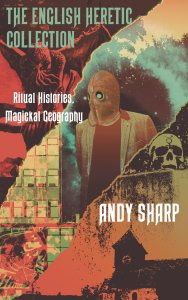
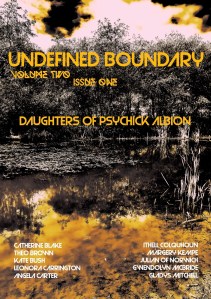
This idea of “psychic archaeology” feels to me like the perfect term to describe the approach of many of those 21st-century writers and artists who have been heavily influenced, directly or indirectly, by the early work of Ackroyd, Sinclair, and Moorcock. As examples, I think of the authors who appear in Undefined Boundary: The Journal of Psychick Albion or Andy Sharp and his English Heretic project. And like Hewison’s trio of London writers, those within this contemporary milieu are usually content to let the mysteries remain. There is no attempt to “solve” the world around us. There are simply suggestions as to how one might view reality with a different filter.

The concept of “London writers” that emerged around 1990 created an easily understood label around which their shared influences could congeal. At this early date Iain Sinclair was just beginning his transformation from avant-garde poet and book dealer into the Wizard of Hackney. His method of engaging with “mundane” reality as something almost magical would inform an entire subgenre of writing in the 21stcentury, one that would effectively become its own intellectual subculture. Acting as something of an alchemical reagent to allow this subculture to begin to grow in earnest, the newsletters of the London Psychogeographical Association first appeared in 1993, drawing heavily on Sinclair’s work. While parodying the “Grand Narrative” approach that characterizes much pseudoscientific writing from the fringes, they created a model in which the occult, history, landscape, popular archaeology, political hegemony, and the effects of capitalism could be easily connected, providing something of a subliminal blueprint for many writers who were to follow.
The timing of Hewison’s book is important. Although many of its intellectual sources can be traced further back, the current 21st-century experimental cultural climate in which the importance of liminality, landscape, folklore, and the idea of occulted history are dominant themes first appeared as something recognizable around 1990. It emerged at the place where avant-garde poetry and art intersected with anarchist and Situationist ideas, often expressed in the language of the occult. In those early days it carried no easy labels, so researching its origins more deeply will likely require an adoption of its own methodology, looking for the traces, the resonances, the “psychic heat” its practitioners left behind them.

—Stephen Canner
A Thousand Little Poets: Dreaming a New Mythology

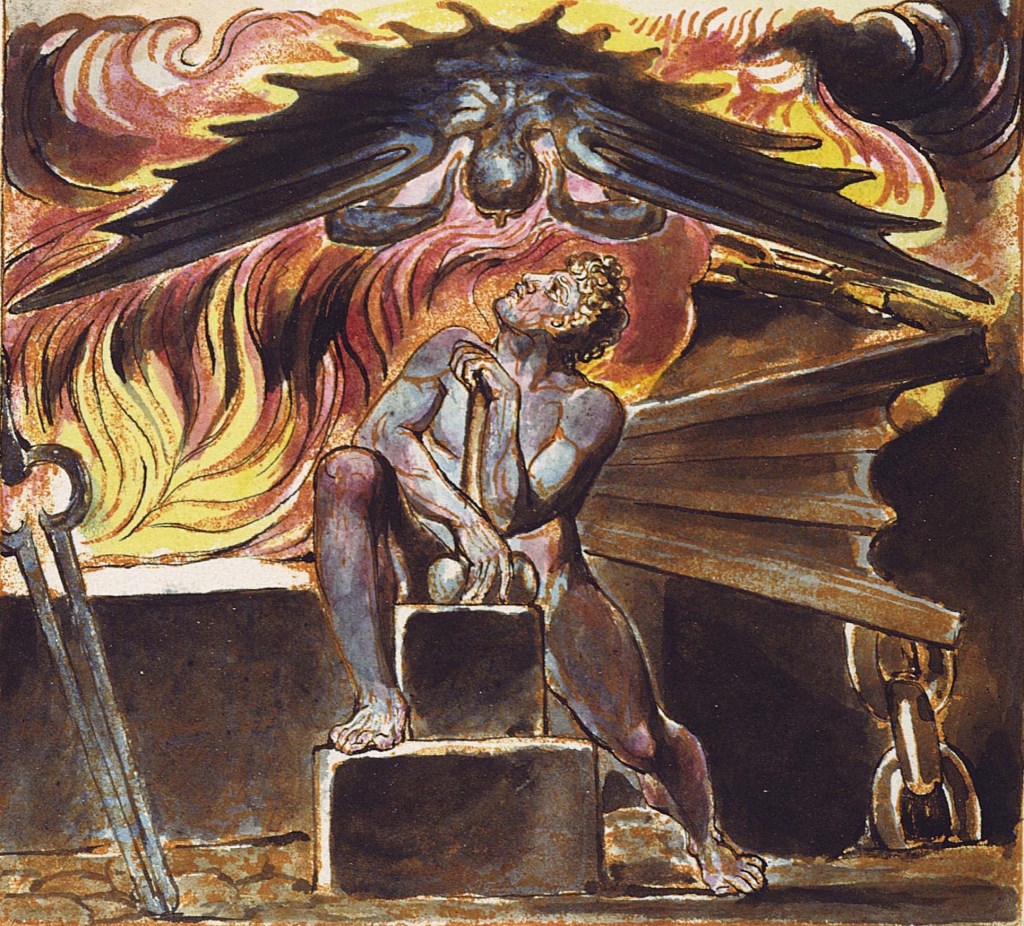
Spectre Over Los. William Blake. From Jerusalem, 1821.

Since the beginning of the 21st century, a flurry of cultural activity has emerged from a certain location on the borderlands of the intellectual landscape. Its points of view are fueled by a distinctly blurred range of influences. These include psychogeography and hauntology, with the occasional influx of Situationist or surrealist sympathies. Although approached from radically different angles, the works created by those operating within this zone—whether literary, cinematic, visual, or musical—tend to fluctuate between the twin poles of fascination with the urban on the one hand and the rural and folkloric on the other, ultimately resolving within the liminal space that lies between the two. But it is within that liminal space—in which brutalist architecture, beat poetry, public information films, ancient village traditions, forgotten library LPs, surrealism, standing stones, 1970s children’s television, pulp paperbacks, and obscure figures from the history of the occult are all treated with equal weight and reverence—that the zeitgeist truly reveals itself. 

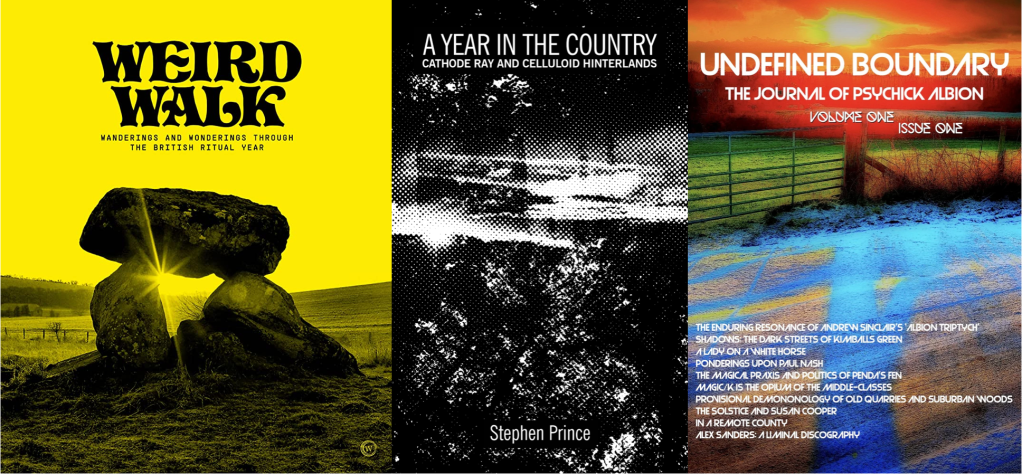
This is a trend that defies easy labels, with most activity being found in the blogosphere and in DIY releases. It finds its voice in zines like Weird Walk, blogs like Stephen Prince’s A Year in the Country, and the output of small publishers like Wyrd Harvest Press or Cormac Pentecost’s Temporal Boundary Press. But what is the point of all this enthusiasm for the forgotten corners of landscape, microhistory, and popular culture? The participants in this milieu are all engaged at some level in poiesis: a creative process, an action that can transform how we see reality. Often present in their works is the attempt to uncover hidden meanings and occulted connections in the otherwise mundane. At times these exercises in avant-garde antiquarianism, hermeneutical urban planning, and occultural archaeology feel like nothing short of an attempt to create a new mythology.

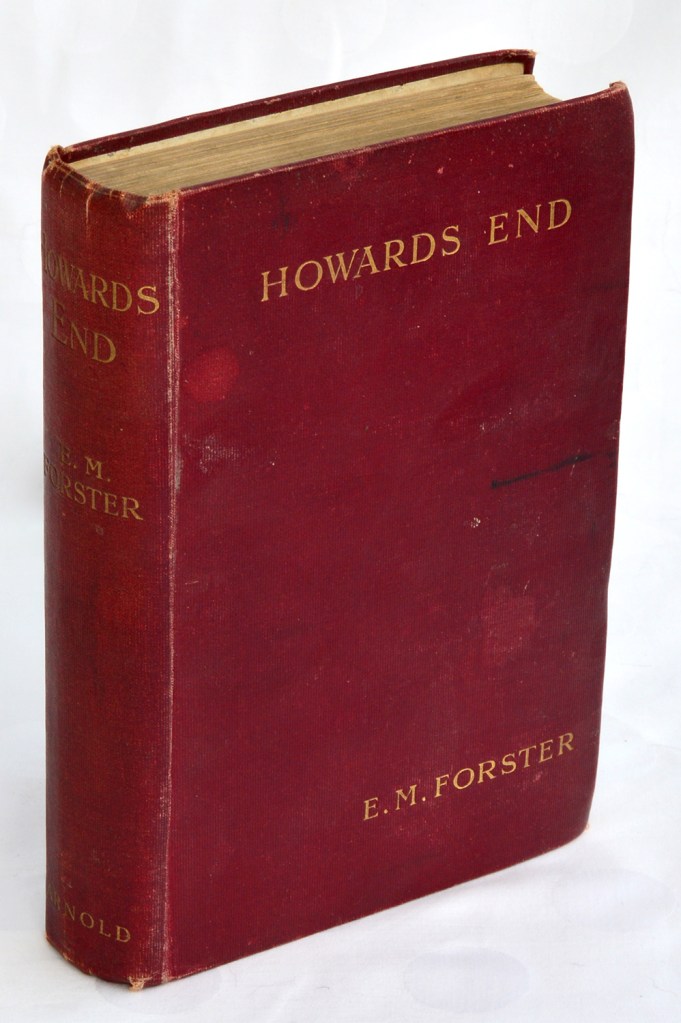
In E. M. Forster’s 1910 novel Howards End there is a scene in which a character begins musing on local legends and their larger meaning while walking across a village green in rural Hertfordshire:

“Why has not England a great mythology? Our folklore has never advanced beyond daintiness, and the greater melodies about our countryside have all issued through the pipes of Greece. Deep and true as the native imagination can be, it seems to have failed here. It has stopped with the witches and the fairies. It cannot vivify one fraction of a summer field, or give names to half a dozen stars. England still waits for the supreme moment of her literature—for the great poet who shall voice her, or better still for the thousand little poets whose voices shall pass into our common talk.”

The character is named Margaret Schlegel. Although educated and well read, she seems to have missed that England’s great poet, the “supreme moment of her literature,” may well have already arrived a century before, in the form of William Blake. Although still sometimes cast as a madman at the time, by 1910 Blake had been rediscovered and a reappreciation of his life and work was in full flower. Also that year, a veritable army of folklorists had already for decades been delving deeply into the island’s folk culture in an attempt to unveil and document England’s “great mythology,” finding it anything but “dainty.” The collected publications of scholars like Alfred Nutt, Jessie L. Weston, and Sir James George Frazer suggested that Britain very much had its own rich mythology that went far beyond nursery tales of enchanted woodlands. Perhaps, though, she had in mind something less fragmented, something that could be served up readymade: a national myth cycle like Finland’s Kalevala or Wagner’s crafting of the Ring cycle into a mythology that a newly-unified Germany could claim as its own.

Despite these apparent blind spots, Margaret’s call for a “thousand little poets” seems almost prophetic, perfectly capturing the creative landscape of the early 21st century in which scores of inventive minds strive diligently, if somewhat obliquely, towards reworking a moribund mythology into something both ethical and relevant to modern society—a new mythology that deals not only with witches and fairies, but also with capitalism, class, identity, and race. Although this trend began in Britain and a number of its threads are decidedly Anglocentric, many of these modern creative minds are no longer content to simply solve the Problem of England—to borrow a phrase from Patrick Keiller—but seem to be seeking new ways to frame the Problem of Modern Existence at its most fundamental level.

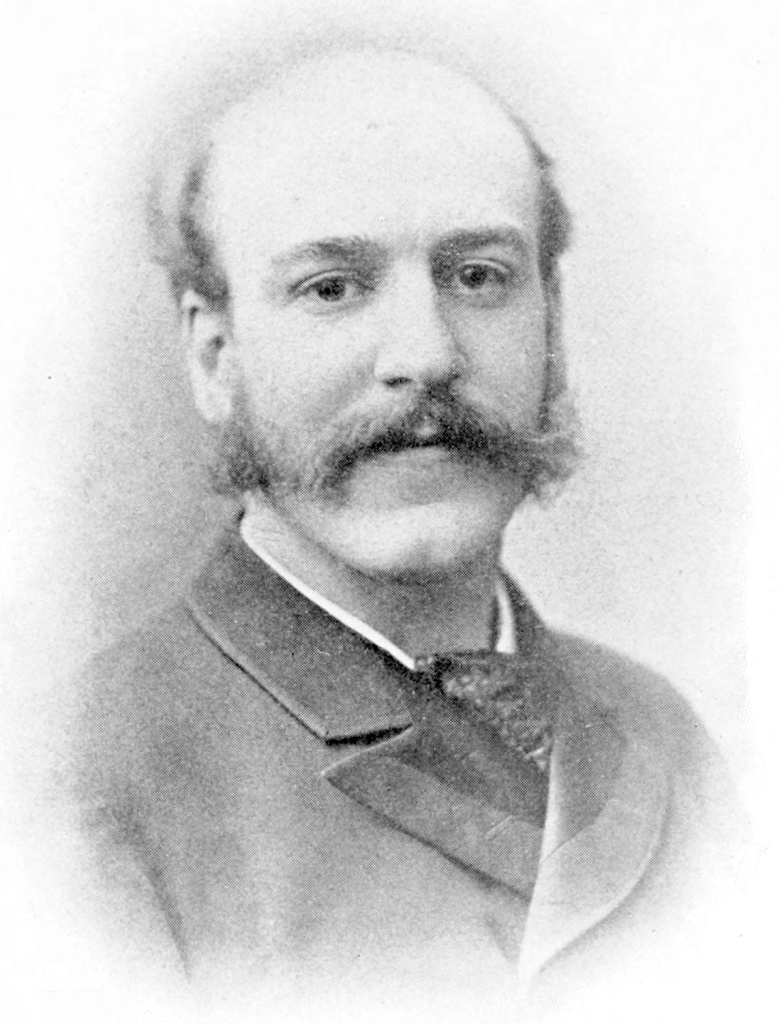
Alfred Nutt: Folklorist, Celticist, and president of the Folklore Society.

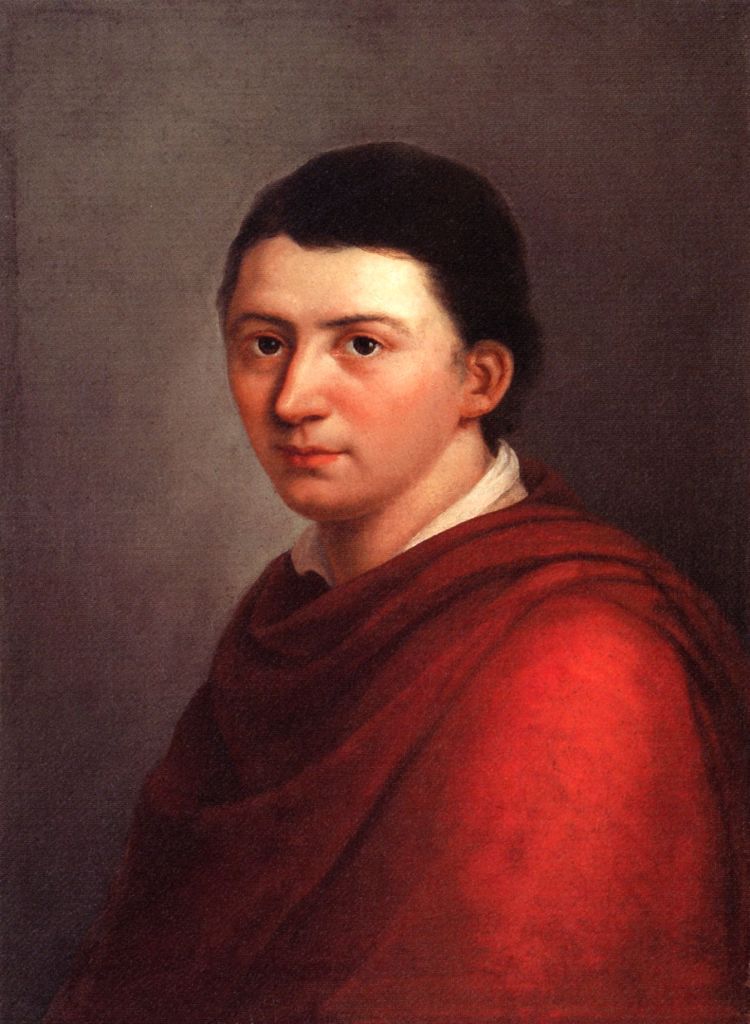
Although Margaret Schlegel and her siblings were portrayed in Forster’s novel as being “English to the backbone,” their father was German. He was said to have “belonged to a type that was more prominent in Germany fifty years ago than now. . . .If one classed him at all it would be as the countryman of Hegel and Kant, as the idealist, inclined to be dreamy, whose Imperialism was the Imperialism of the air.” Forster’s choice of surname for this family was unlikely to have been an accident. At the beginning of the 19th century, the very same moment that Blake was delivering his own half-mad vision to the world, the German romantic philosopher Friedrich Schlegel was calling for the creation of a new mythology, one that would unlock humankind’s “divinatory power.” In his article “Filling the Black(w)hole: The Call for a New Mythology by the German Romantics and Its Reach into the Digital Age,” scholar Nathan Bates asks, “But how could such a mythology be created?” He answers this by saying that “a solution would be best achieved, according to Schlegel, by individual creative efforts.” 

Portrait of Friedrich Schlegel. Franz Gereis, 1801.

Of course, what is meant here by mythology is not simply fairy stories, but something closer to Joseph Campbell’s concept of myth as the ongoing search for “the experience of life.” This is the very thing that has occupied philosophers, psychologists, and theologians for millennia, the search for those fundamental elements within our psychic depths that serve as anchor and fulcrum in the creation of our metaphysics, our cosmology. Myth is the form those elements take when they cross the proscenium from the abstracted world of the subconscious and emerge into the part of the mind that engages with the physical world. From there they reveal themselves—subtly, often unrecognizably—translated into cultural expression. This expression includes the whole gamut of human endeavor: art, architecture, music, literature, cartography, design, urban planning, and much more, in both their “high” and vernacular forms. 

The most exemplary contemporary expression of this tendency in both its breadth and depth is perhaps Undefined Boundary: The Journal of Psychick Albion, the latest imprint from Temporal Boundary Press. In the introduction to the second issue, editor and founder Cormac Pentecost writes: “The defining feature of all things Psychick Albion is the question of whether reality contains something more than we suspect. Artists of all persuasions are intimately in touch with this question because their work involves imagination and creativity; they are working to bring new worlds into being. . . .There is a tacit agreement between writer and reader that we will allow the possibility of this other reality to hang in the air, perhaps as an illusory image of something eternally true, perhaps as a simple fiction, but in any case as a possibility. This is the key: not to interrogate the ontological status of this other state of being, but to explore it for the lessons it can bring us about how to most creatively live our lives.” 

In his essay “A Lady on a White Horse” in the first issue of the journal, Nigel Wilson explores the folklore surrounding this figure, through her pagan, Roman, and Christian-era manifestations. He closes his piece by casting the modern era as one in which it has “become difficult to dream.” The current era is one in which “the emphasis is for leaders, preferably a strong authoritative one who is beyond contradiction; a person to whom we are all subordinate: the hero, the genius, the Great Leader. Let us call this the Age of the Father.” He then goes on to reject this worldview and to make a statement that could easily be interpreted as a call for a new mythology: “. . . but let us also be aware that this age may now be approaching the point where such stern figures have become redundant to human need for the simple reason that they don’t make sense anymore. What is required is more cooperation, more collective decision making.” 

In the journal’s second issue, in his article “The Spectre of Trauma in the Myth of Psychick Albion,” George Parr is even more specific in his call for a new paradigm: “The suggestion then, is that through piecing together these lost threads we might find an alternative Britain in which the pastoral alchemy and gothic psychedelia of the island’s rich and diverse countryside may no longer be a quaint trend subtly running through our traditions and art, but at the very forefront of our culture. A Britain where Tory aristocracy is not the norm, where the spirit of anarchic magic and rebellious art are the guiding principles—a Psychick Albion in place of a Great Britain.”

In responding naturally to the various fascinations that propel them along their various trajectories, the collective work of these “thousand little poets” reveals that whatever vestiges of traditional myth remain in Anglophone cultures are often woefully inadequate for the spiritual, intellectual, and material circumstances in which we now find ourselves. To be clear, I don’t mean to imply that this search for a new mythology is necessarily a conscious pursuit. As Joseph Campbell stated in his famous 1988 television interview with journalist Bill Moyers, “You can’t predict what myth is going to be any more than you can predict what you’re going to dream tonight. Myths and dreams come from the same place.” 

—Stephen Canner

David Peace and the Ruptures of History

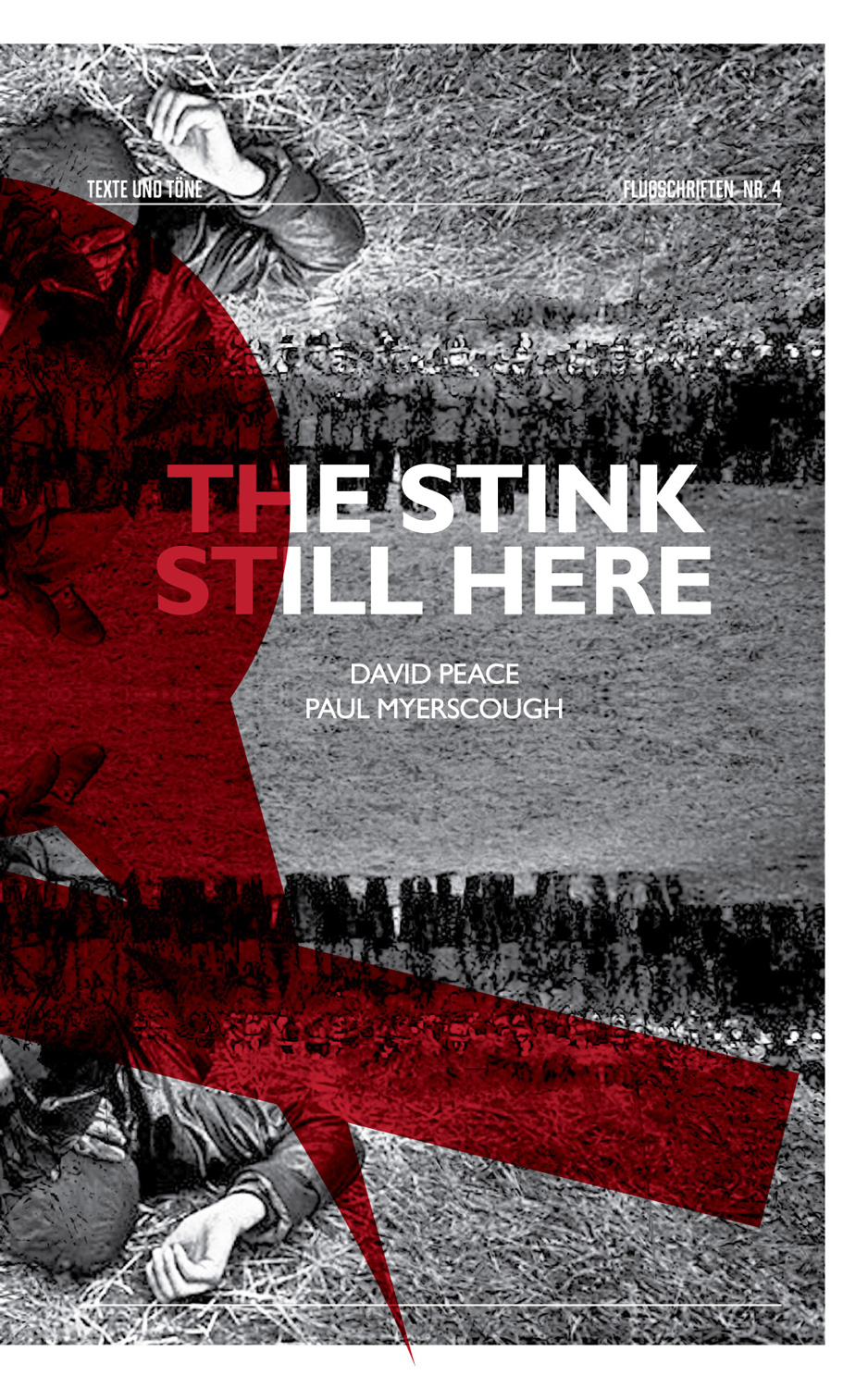
In the current landscape of small presses that fall within what I have begun to call the Psychogeographical-Hauntological Matrix, Sukhdev Sandhu’s Texte und Töne stands out for its consistently high quality releases. In The Stink Still Here (2014), editor Paul Myerscough interviews novelist David Peace about his novel GB84, which deals with events during the 1984 miners’ strike in Great Britain.

thestink_cvr

On the surface, Peace’s novels may seem to be thrillers or narratives destined to become action films, but underlying this is an attempt to get at history not “as numbers and dates, but history as force and nature.” History is made by “occult things which first erupt and then rupture ‘the Official Narrative or Record’ on all levels, individual and communal.”

At the beginning of the interview, Myerscough succinctly places Peace’s work in the context of mining these occult histories:

“That word ‘occult’ is one you’ve used before—and which people have been eager to adopt—in talking about your work. The hidden, the concealed, the secret, that which is communicated only to initiates: all these meanings of the ‘occult’ speak to the way in which your novels deal in histories, which when they have not been invented, might have been overlooked, covered up, destroyed or denied; and they speak to motives and causes that aren’t a matter of official record, but of conspiracy, private enterprise, or shadow state activities.”

What does history look like when the narrative is created from something other than the official archive?

—Stephen Canner

Tom McCarthy and the Repetition of History

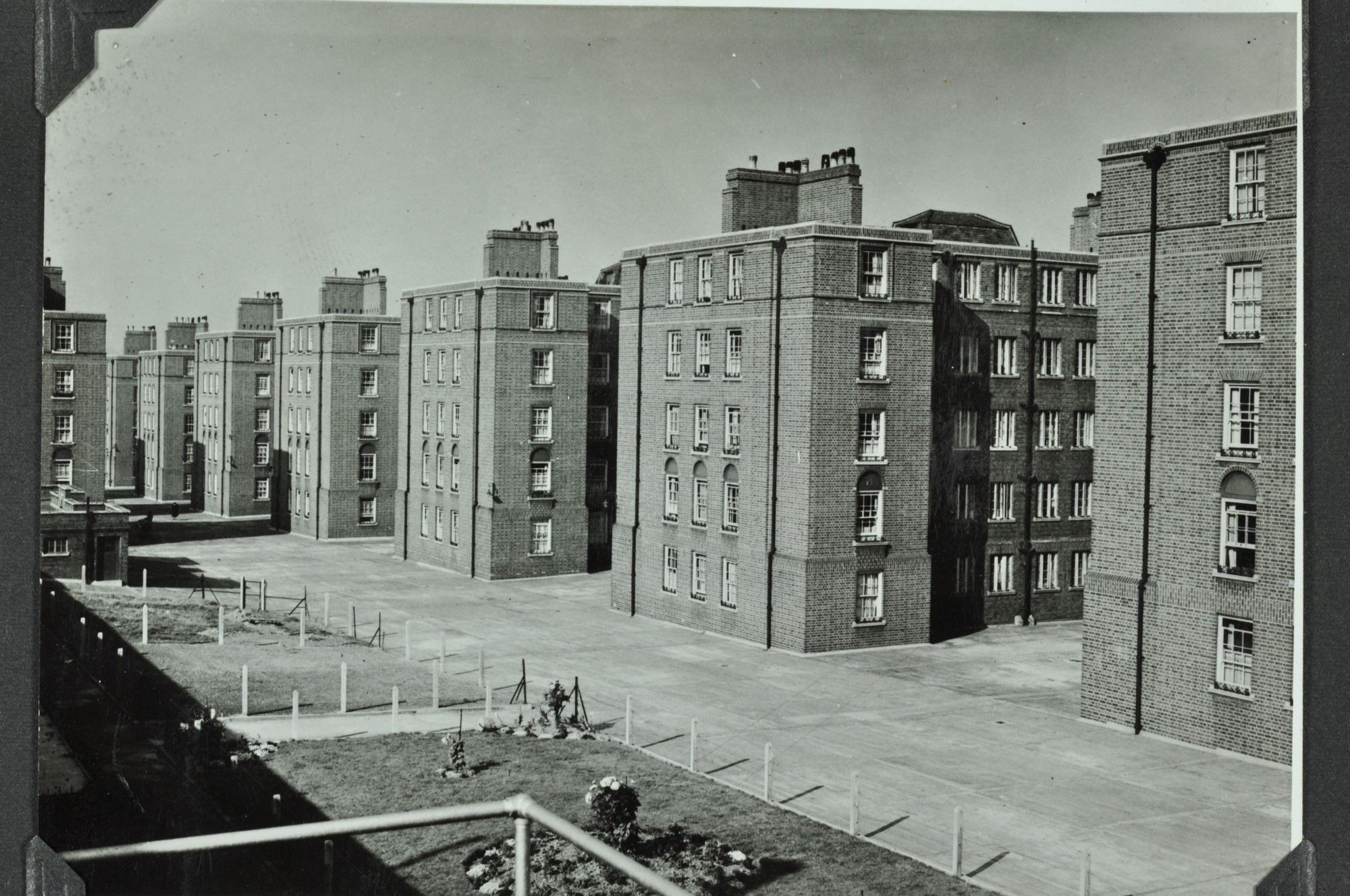
LMA_4656_D_04_002_0076A-e1425651535970

In 2005, a small Paris-based publisher issued Tom McCarthy’s first novel, Remainder, in an edition of 750. Metronome Press, founded by curator and cultural historian Clémentine Deliss, had existed for most of the previous decade as a cutting-edge arts magazine. For a moment around 2005, it appeared that the transformation of Metronome, the magazine, into an imprint inspired by both Maurice Girodias’ Olympia Press and Jack Kahane’s Obelisk Press might be a portent that Paris could reemerge as a center for the avant-garde anglophone literary scene. It seems, though, that both the magazine and the press ceased operations in 2007 and Deliss has since then focused on academic and museum work.

There’s still something satisfying in this tale. An unknown British author, after being rejected by major publishers in the UK, turns to an open-minded, upstart press in Paris. In his 1790 work Reflections on the Revolution in France, Edmund Burke said, “People will not look forward to prosperity who never look backward to their ancestors.” In turning to Paris to find a publisher for his book, McCarthy was simply looking backwards to his spiritual ancestors: Joyce, Beckett, and Burroughs. George Santayana took this idea of learning from the past a bit further in his 1905 The Life of Reason, this time using a phrase that stuck: “Those who cannot remember the past are condemned to repeat it.” This condition of mindlessly repeating history was one he associated with “children and barbarians.” While Santayana’s declaration seems to be an attack on ignorance, willful or otherwise, it also has a rather bold assumption embedded within it. It assumes both that memory is something we can control and that it is somehow a reliable reference to some objective reality.

Memory, our control of it, and the repetition of the past are major themes in McCarthy’s Remainder. I won’t attempt to recount the plot of the novel since a surface telling would only hint at what lies within it. Although it is presented in a relatively straightforward narrative structure, the novel is like a prism or a kaleidoscope. What is reflected there changes as it is viewed from different angles. Like some textbook on transdimensional geology, it deals with multiple strata of existence. As each layer is examined, however, its instability becomes apparent and there are hints that the next layer is really the important one. But as we consider the new layer the process repeats itself. We can roughly give these layers names: memory, history, identity, time, psychogeography, hauntology, the infinite, and how our individual reality is made up of learned cultural forms. But these terms are only guideposts, as there is a sense that we are really dealing with concepts that transcend language itself. Buried within all this are echoes (traces?) of Proust, Sartre, and Georges Perec.

On one level Remainder is an easy read, as unlike much “experimental” literature it is told in a very clear, linear way. There are even a few moments in the book where it feels like McCarthy may have compromised in order to maintain a semblance of a narrative in which “something happens.” On a more important level, however, it is a very challenging work. Reading it, one either feels completely frustrated (not to mention unnerved) and wants to throw it across the room or is drawn, fascinated, into its complexities. As a reader of this blog, however, you will likely already have an inkling as to which camp you fall within.

—Stephen Canner

The Cup, The Horse, and The King

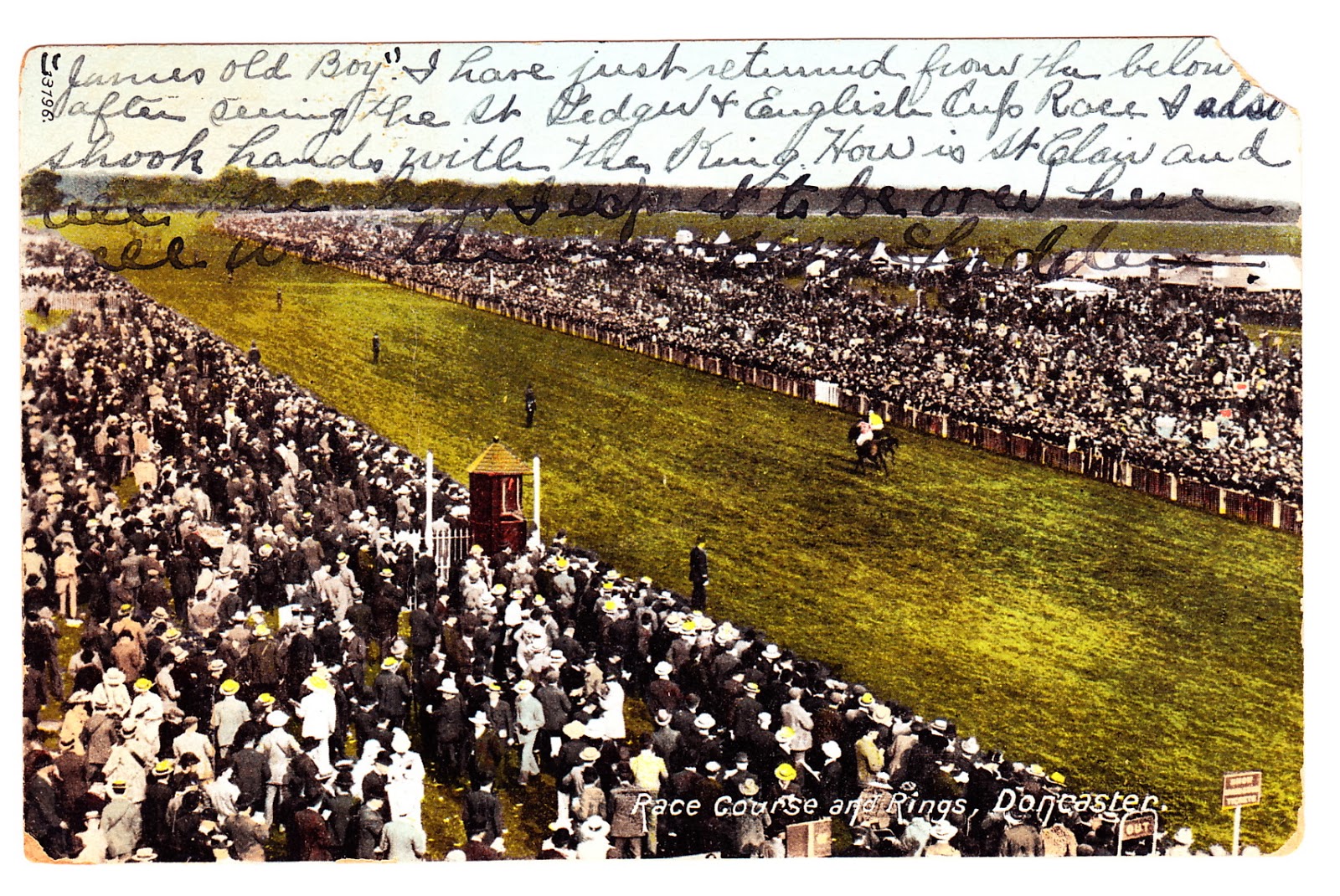
We had followed the river down from Galena. In places it was much more stark and beautiful than the Midwest is supposed to be. We arrived at Hannibal in the mid-afternoon and decided to take a stroll down the riverfront. Around the corner from Mark Twain’s boyhood home an antique shop drew us inside. There I found a postcard from the Doncaster Racecourse in England, postmarked 1907. It was not a particularly interesting view, but after reading what was written upon it, I bought it.

postcard

Albert Bigelow Paine, Mark Twain’s biographer, tells us that shortly after arriving in England in June 1907, Twain picked up the morning paper and read the headline, “Mark Twain Arrives: Ascot Cup Stolen.” The juxtaposition of the two items was likely an intentional attempt at British wit. A couple of weeks later, Twain attended a dinner held in his honor at the Savage Club, an institution that still exists and bills itself as “one of the leading Bohemian Gentleman’s Clubs in London.” There he was presented with a gilded plaster reproduction of the Ascot Cup along with a handwritten note from his supposed “accomplice” in the theft. During his speech, he did not mention the cup or the attempts at humor surrounding his implied involvement with its disappearance. He spoke instead of his friendship with Henry Morton Stanley, the famous African explorer and Confederate veteran of the Battle of Shiloh. Twain had been made an honorary life member of the club a decade earlier and Stanley was one of only three others who had also received this honor. The two other recipients were the Arctic explorer Fridtjof Nansen and King Edward VII, when he was still Prince of Wales. It was on this same trip that Twain was invited to Windsor Castle to attend a garden party hosted by King Edward and Queen Alexandra. There he famously upstaged the royal couple by grandly offering to buy the castle from them.

The Ascot Gold Cup had been stolen during the 4:30pm race at Ascot on 19 June. It was one of the biggest news stories of the season. King Edward himself had paid for its manufacture, imbuing it with a hint of the authority of royal sanction. Scotland Yard dispatched its best men on a quest to find the cup. They could only understand how such a theft could have occurred, in broad daylight and apparently under the watchful eyes of several guards, by creating a myth to explain it. The theft, according to them, was undoubtedly perpetrated by an organized band of gentleman thieves with access to motor cars. Later in the summer, a replacement was commissioned to be made by Garrard’s, the very firm that had supplied one of the guards employed to watch over the cup at Ascot. The search continued for months afterwards, but the original cup was never recovered.

In 1931, former Scotland Yard Special Branch detective Edwin T. Woodhall published an article claiming that a servant involved in the theft had, decades after the fact, confessed to him that it was carried out as the result of a wager between two members of the nobility in order to impress a third, a lady. The servant himself had carried out the theft. There was no organized band of gentleman thieves. The servant was simply ordered to steal the cup so that his employer could win the wager. He did so during an opportune moment when, the other guards having stepped away, the lone policeman on duty turned his back for a moment. The theft was meant as a joke and the intention had originally been to return the cup, but after the event received such widespread publicity the trio panicked. The servant told Woodhall that some time later in 1907 he accompanied his employer out to sea where the cup was placed in a weighted bag and dropped into the water. By the time of the article, the three nobles involved were long dead and the servant was in the process of immigrating to “the colonies” under a new name.

On the day the cup was stolen at Ascot, 19 June 1907, a man named John Henry Taylor who was sometimes known as D. J. W. Tremayne, was performing with a Commedia dell’Arte troupe there as a singing pierrot. As was customary, the King, himself an ardent fan of horse racing, was in attendance. He had also attended the Windsor races at which the troupe had performed earlier that summer. Taylor was a 25 year old diamond setter from London who had taken work as a singing clown that season “owing to business being at a standstill, and having practically nothing to do.” Later in the year, on 10 September, Taylor was tried for fraud at the Old Bailey in London.

The nature of Taylor’s crime and the trial itself are not exciting stuff. Before heading off to Windsor with the Commedia troupe, he convinced his employer, a jeweler, to allow him to take an assortment of jewelry worth over £1,000 to offer to clients whom he would likely meet there and at Ascot. His employer agreed, having no reason to distrust him. After arriving at Windsor, Taylor claimed to have met a Captain O’Shea, a man he assumed to be a wealthy regular customer of his father, a London hackney driver. This Captain O’Shea told Taylor that he had a foolproof betting system and convinced him to buy into it. Money was won at Windsor, lost at Ascot, and lost again after O’Shea convinced Taylor to pawn the jewelry in his possession. When Taylor didn’t arrive back at work with either the jewelry or the money to pay for it within a week or so after his expected date of return, a warrant was sworn out against him. On 12 September he was found guilty of fraud, but the question was left open as to whether this was due to actual criminal intent or through being duped by a “racing sharp.” As Pierrot in the Commedia dell’Arte was usually portrayed as a naif who was easily taken advantage of, the latter interpretation is the more poetic. His sentence is not recorded.

On 14 September, two days after Taylor’s trial ended, a letter from Alfred Nutt, renowned Celticist and president of the Folklore Society, was published in the journal The Academy. Nutt’s letter was in response to a series of three articles by Arthur Machen the journal had published the previous month. These articles outlined Machen’s theories on the pagan, pre-Christian origins of the legend of the Holy Grail, which he referred to as the Sangraal. Nutt, one of the era’s leading authorities on the Grail, did not refute Machen’s theories, but offered a respectful discussion of their finer points and addressed the weaker areas where questions might still remain. At least a half dozen books on the Grail were published in 1907 alone. Researchers such as Jessie Weston were actively delving ever deeper into the idea of pagan sources for the Arthurian legends in general and the Grail myth in particular. This line of thinking perhaps came to full fruition in her 1920 book From Ritual to Romance, which was cited by T. S. Eliot in his notes to The Waste Land and appears on Colonel Kurtz’s bookshelf in the film Apocalypse Now. Nutt pointed out that Machen had earlier stated that “we have had treatises to show that Adonis is somehow concerned in the story of the Sangraal” and wondered whether this could be evidence that Machen had foreknowledge of Weston’s as yet unpublished article “The Grail and the Rites of Adonis,” which appeared later in the year. The summer of 1907 was a particularly active season in what was overall a fertile period for Grail studies. 

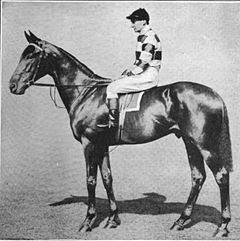
Wool_Winder

On 11 September 1907, a three-year-old stallion named Wool Winder won the St. Leger Stakes at Doncaster. Also on that date at Doncaster, a man named Ladden picked up a picture postcard to send to a friend in America. A century later, this card eventually found its way into the antique shop in Mark Twain’s hometown of Hannibal, Missouri, and now sits on my desk. On the front is a view from the grandstand at the Doncaster racecourse, looking down onto the finish line. The turf cuts at an angle across the picture plane. At the line are two riders nearly neck in neck, one slightly behind. On 13 September, Ladden wrote across the face of the card:

“James old boy,” I have just returned from the below after seeing the St. Ledger [sic] and English Cup Race. I also shook hands with the King. How is St. Clair and all the boys? I expect to be over here all winter. [H. M.?] Ladden.

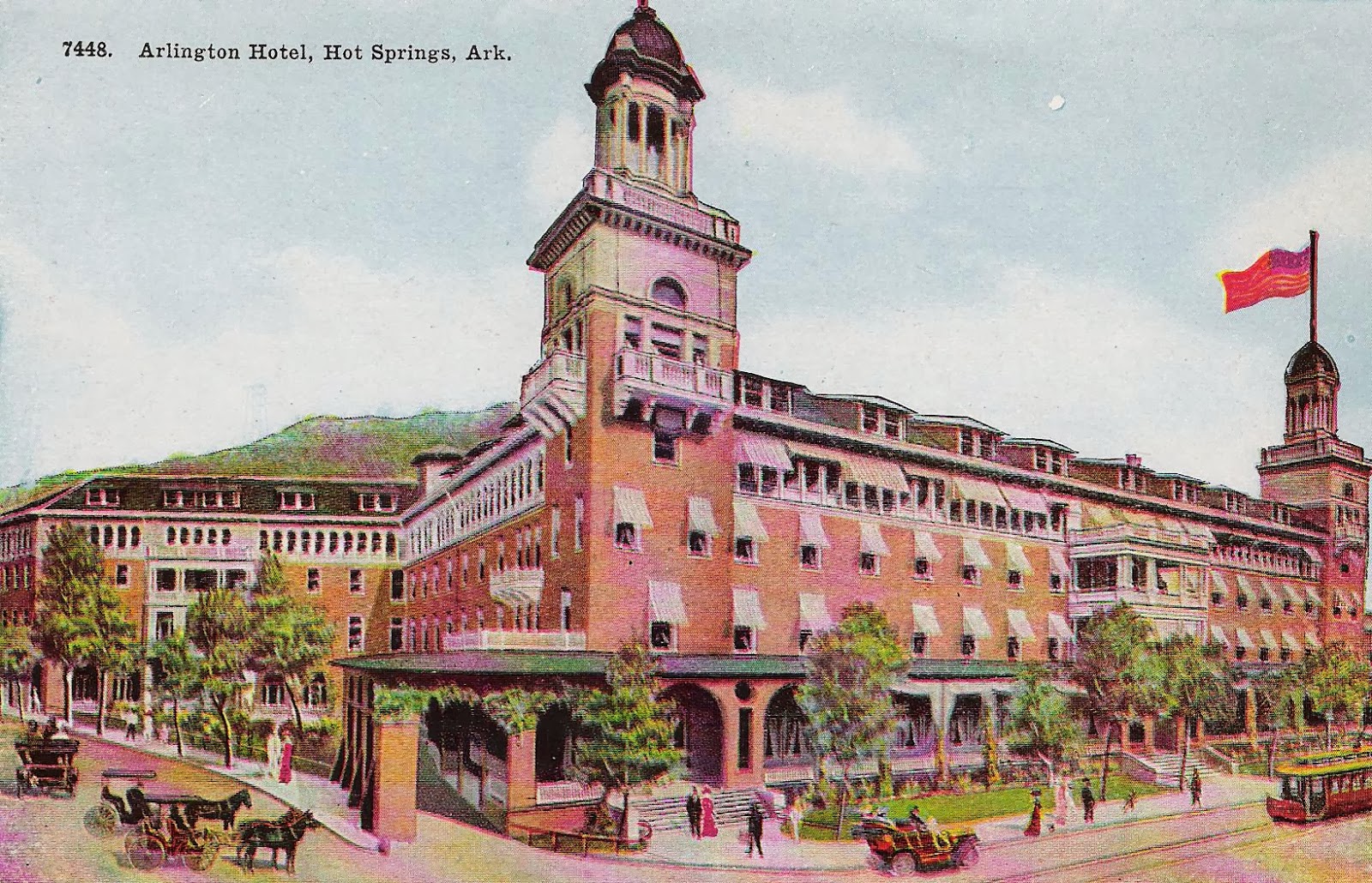
The card was addressed to Mr. James Cameron at the Arlington Hotel in Hot Springs, Arkansas. It was postmarked at Liverpool on 14 September and again at Hot Springs on 27 September. We can only make guesses as to the identities and ultimate fates of Messrs. Ladden and Cameron. With nothing to go on besides a relatively common name, Cameron will likely remain a mystery. H. M. Ladden’s sole appearance in the historical record is in a 1919 issue of Variety that mentions an individual of that name contributing fifty cents to a benefit fund for the vaudeville performer Bert Leslie. The tantalizing idea that he might himself have been a vaudevillian is not borne out by research. Wool Winder’s fate is known, however. He was sold to the Austrian government in 1909 and spent the war years as an enemy thoroughbred.

Hot_Springs_second_Arlington_Hotel_1922

The Arlington Hotel in 1907 was a grand building of 300 rooms that had been built in 1893 as a replacement for the original 1875 structure. The hotel served the nearby Hot Springs National Park with its famous hot mineral baths, then believed to relieve diseases of the skin, blood, nerves, and the “various diseases of women.” In its small way Hot Springs, Arkansas, was a North American version of Bath in England or Baden-Baden in Germany, where people of means would retire for a few weeks to “take the waters.” We can only guess at what Cameron was doing there, but there is a hint. Oaklawn Park Racetrack had opened at Hot Springs in 1905. The track featured six races a day on the British model. As Cameron’s friend Ladden was a racing enthusiast, it’s easy to draw the conclusion that they were both “sports” and were in their respective locales that summer to enjoy the horse racing. Due to a literally titled bill introduced into the Arkansas state legislature, “An Act to Prevent Betting in any Manner in This State on any Horse Race,” which had just passed into law in February, the 1907 racing season was to be the last at Oaklawn Park for a decade.

Both Bede and Geoffrey of Monmouth wrote of the legend of Hengist and Horsa, whose names respectively mean “stallion” and “horse.” These heroes arrived in Britain in the 5th century as mercenaries under the employ of Vortigern, King of the Britons. The Anglo-Saxon invasion has traditionally been dated to the appearance of these horse-men upon England’s shores. Multiple earlier sources mention pairs of twin brothers associated with the horse appearing throughout Germanic folklore. The archaeologist J. P. Mallory has linked these with other divine horse twins in early Indo-European sources, such as Castor and Pollux in Greece or the Ashvins of the Vedas. From the  beginning, what were to become English language and culture emerged with a very strong association with the horse .

In many of the Grail legends, the cup gets its power from the fact that it was used, touched, by Jesus during the Last Supper. The Royal Touch imbues it with authority. In his Idylls of the King, Tennyson casts those seeking the Holy Grail as being on a noble quest, one worthy of such an object. Arthur and his knights represent the societal ideal; and the implication is that it is only natural that the Grail belongs with them, an embodiment of Victorian virtue. The horse occupies a darker space in Tennyson’s view. He associates it with the savage, the pagan, when referring to the twelve legendary battles fought by Arthur, possibly against the Germanic forces of Hengist and Horsa: “Knights that in twelve great battles splashed and dyed / The strong White Horse in his own heathen blood.” The horsemen bring disorder and chaos. These heathen horsemen interrupt the search for the Grail with their constant warring. Why do Arthur and his knights spend so much energy searching for the Grail? What is missing from their world that can only be made whole by finding this sacred cup?

We are left with a postcard, a fountain pen scrawl of ink across its face, and a handful of names of men all now long dead. I had to use a jeweler’s loupe to make out the signature on the card. Even magnified, I’m not entirely certain of the first two initials. The signature itself becomes an act of mystery. Below the signature and the message that tells us its author received the Royal Touch, thousands watch two riders, tiny in this landscape, crossing a barren expanse of turf. Was Ladden also at Windsor and Ascot that summer? Did he see Taylor perform as Pierrot? Did he witness the commotion on the afternoon of 19 June when it was discovered that the Ascot Gold Cup was missing and then chuckle, along with Mark Twain, at the next morning’s headline? Did he see the Scotland Yard men assembling to begin their quest, while the thunder of hoofbeats echoed in the background?

—Stephen Canner

Cathode’s Children: Folk Horror Revival

folkhorror

Read most any description of the now-burgeoning genre known as folk horror and the first reference points you’re likely to be given will be three films released within a half decade of one another: Witchfinder General (aka The Conqueror Worm, 1968), Blood on Satan’s Claw (1971), and The Wicker Man (1973). These films are indeed a perfect place to begin any exploration of the topic. Each of them at root deals with a fear of the survival (or the revival) of pre-Christian beliefs and practices. I would go so far as to argue that this fear is also a mask for a deeper fear: that of the abandonment of Christian sexual taboos in favor of a more natural view of sexuality. These films appeared just as the sexual revolution was beginning to fully integrate itself into mainstream culture and could be viewed as a response to those changes. But this is just a starting point. Other themes these films exhibit can be phrased in sets of binaries: pagan vs. Christian, traditional vs. modern or progressive, local vs. national, or rural vs. urban. It is within the first element of these binaries, the traditional, the local, the rural, and the pagan in which the mystery and the horror lies.

There were earlier films that are often seen as precursors to those mentioned above, Jacques Tourneur’s Curse of the Demon (aka Night of the Demon, 1957) for instance, and many others have been made since The Wicker Man debuted in 1973. It would be wrong to think that folk horror is entirely a cinematic genre, however. Two of the “unholy trio” of films above started life as novels and the mass market literature of the 60s and 70s is filled with many other examples of folk horror gems. It is probably in television, however, that folk horror experienced its fullest flowering. This occurred not only by giving the above-mentioned films a much wider visibility through late night airings, but via original programming as well, much of it intended for younger audiences.

rav1

Phil Daniels in Raven.

I’ve been aware of folk horror for many years, although I never had a name for it until the A Fiend in the Furrows conference was held in Belfast in 2014. Before that, I simply saw it as an aspect of the folkier end of hauntology. Hauntology is a television-obsessed area and it was through my own hauntological explorations, revisiting and discovering long forgotten TV shows of the 60s and 70s—like Children of the Stones and the almost totally unremembered Raven, both from 1977—that I first started thinking of folk horror as a category. I still had no name for it, I just knew that I was attracted to this supernatural and mysterious material that drew on rural and folkloric themes. I wasn’t the only one thinking along these lines, though, and when the announcement for A Fiend in the Furrows appeared, it felt as if something whose time was long overdue had finally arrived.

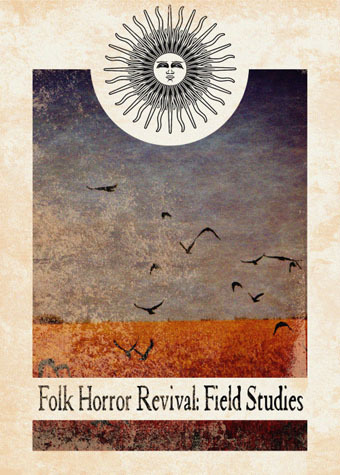
The recent appearance of Folk Horror Revival: Field Studies edited by Katherine Beem and Andy Paciorek (see below for details) reinforces the idea that television was a huge force in the development of the genre. Gray Malkin’s “Public Information Films: Play Safe,” Andy Paciorek’s “Albion’s Children: The Golden Age of British Supernatural Youth Drama,” and Adam Scovell’s articles on Nigel Kneale all explore various aspects of the genre’s manifestation on TV. Throughout the book, even in articles about music, art, or cinema, television is present as influence or subtext. My own piece in the book, “Folklore and the River: A Reflection on Davis Grubb’s The Night of the Hunter,” exists because many years ago I saw Charles Laughton’s film version on television, which led to my interest in the original novel. For me, folk horror still sits firmly at the folkloric end of hauntology and will be forever associated with a certain aesthetic, a certain feel, that was occasionally captured so perfectly on television in the 60s and 70s. I see this as its source, however, and not as a limiting factor. Folk horror is still a living genre with a veritable labyrinth of angles to be explored, as Folk Horror Revival: Field Studies makes evident.

Folk Horror Revival: Field Studies can be ordered here.

100% off all profits will be donated to projects run by The Wildlife Trusts.

—Stephen Canner

The Occult Library of Charles F. Cox

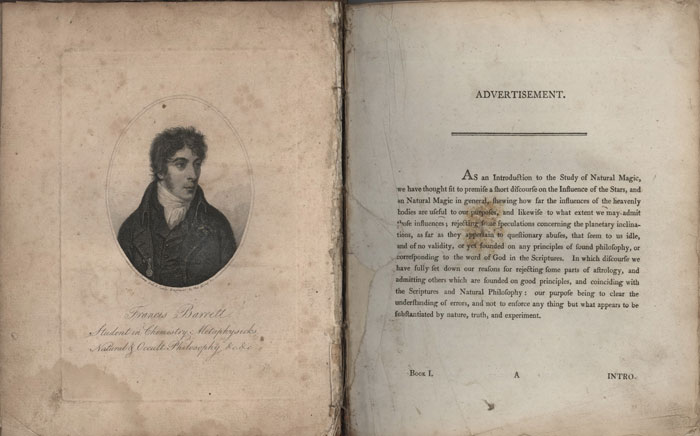
BarrettMagusFrontispiece

Frontispiece to Francis Barrett’s Magus, 1801.

I’m a geek for bibliographies and old auction catalogs that list books that are now difficult to find in any edition. Auction catalogs can be especially mouthwatering as they often contain details about the bindings of the books offered for sale. Many of these catalogs become rarities themselves, as is the case with a late 1907 Sotheby’s catalog, Books on Magic and Other Occult Subjects Property of Charles F. Cox. Cox was president of the New York Academy of Sciences as well as several other major New York area scientific organizations. He was something of an expert on Charles Darwin and was known in his time as a major collector of Darwiniana. Three years before his death he auctioned off his collection of occult books. The original Sotheby’s catalog is extremely rare, the only copy I can find in a public institution is at Yale (surely there must be one or two in private hands?), but the “In the Sale Room” column in a 1908 issue of The Connoisseur gives us both a taste of its contents and a feel for the state of interest in occult books at the time:

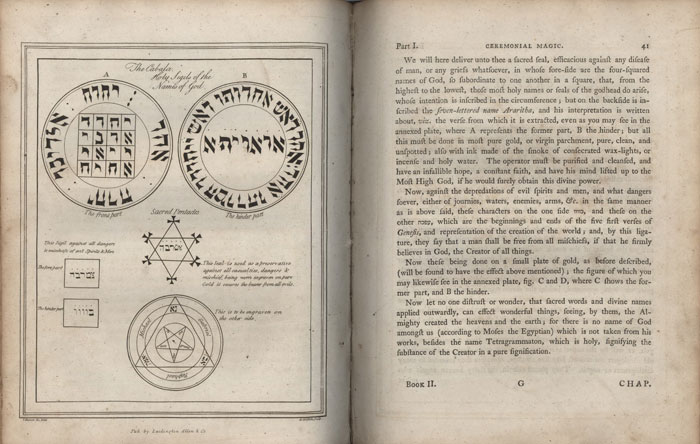
Barrett Magus

The Ceremonial Magic chapter in Barrett’s Magus, 1801.

On November 6th Messrs. Sotheby sold an extensive collection, consisting almost wholly of works on magic and other occult subjects belonging to Mr. Charles F. Cox, of New York. Mr. Van Antwerp set a precedent in March last, when his library was removed from that city for sale in London, and the very high prices realised acted as a direct encouragement for further moves in the same direction, for there is very little, if any, doubt that books of a high class realise more in London than they do in the United States. Mr. Cox’s occult library was, however, hardly of the right kind to make the correctness of this opinion self-evident. A few years ago a great wave of occultism spread over this country, but it has now almost entirely subsided, and the prices realised for occult literature have declined to the same degree. For this reason the 389 lots realised but £317, though many of the books were important enough to merit a better fate. That Agrippa’s Vanity of Arts and Sciences, 1685, 8vo, should reailise but 15s, and the same author’s Fourth Book of Occult Philosophy, 1783, 8vo, but 13s, notwithstanding that both were bound in green morocco, with gilt edges, is inexplicable on any other hypothesis. Several works by Paracelsus, including his Aurora, 1659, 8vo, went for sums varying from 23s to 12s; the first edition of Bodin’s De la Demonomanie des Sorciers, printed at Paris in 1581, for 23s (calf gilt); Barrett’s Magus, the original edition of 1801, for 33s (half morocco); and Wilson’s Dictionary of Astrology, 1819, for 6s (calf). The only book here which realised a fairly good price was the Magus. All the rest, and indeed all the books in the catalogue, would have sold for much more seven or eight years ago.

—Stephen Canner